Last updated November 22, 2026
 Raised-panel steel
 Carriage house
 Modern flush
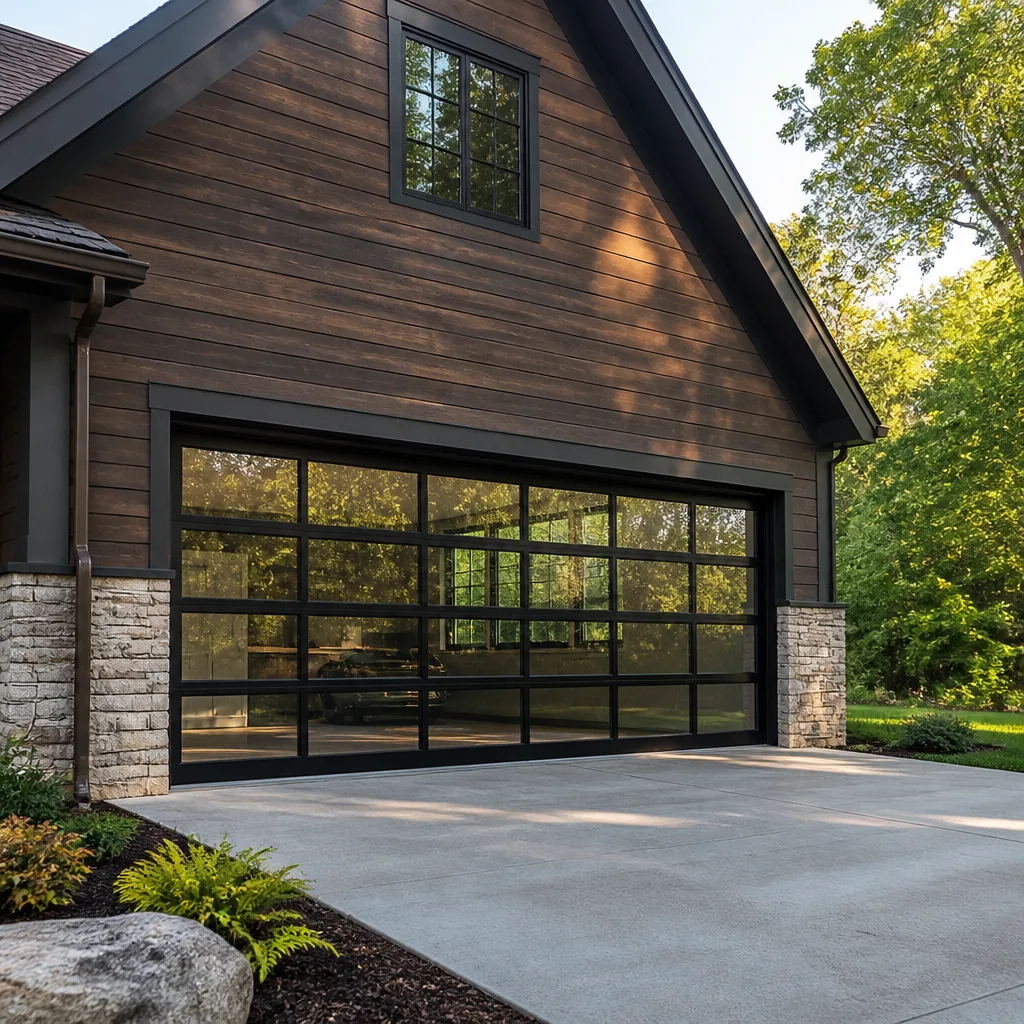 Full-view glass
 LiftMaster openers
 Chamberlain openers
Full 25-point door and opener safety check with every visit - springs, cables, rollers, tracks, and your LiftMaster or Chamberlain opener included
You get a price before we start. It does not change when the pro arrives.
Get your free estimateGarage Door Warning Signs: A Florissant Homeowner’s Reference Guide
A garage door that’s “just slow” isn’t aging gracefully. It’s telling you exactly which component is failing, if you know how to listen. Most homeowners in Florissant treat the first odd noise or uneven gap as something to live with until the door quits entirely. That’s backwards. The symptom you notice is rarely the actual problem, and the noise or motion that bothers you is a message from a specific part: a roller bearing, a torsion spring, a length of cable, or the opener’s travel setting. This guide works backward from what you can see and hear to the component that’s causing it, so you can describe the problem accurately, know which signs are genuinely urgent, and avoid paying for the wrong fix.
Quick Answer
Garage door warning signs worth acting on immediately include frayed or broken cables, a visible gap in a torsion spring, a burning smell from the opener, and any door that drops suddenly or comes off its track. Everything else, including grinding noises, uneven closing, and slow opener response, points to a specific failing component that a trained technician can often fix on a scheduled visit before it turns into a bigger repair.
Styles & brands we work with
- Raised-panel steel
- Carriage house
- Modern flush
- Full-view glass
- LiftMaster openers
- Chamberlain openers
Table of Contents
- What the Sound Tells You: Mapping Noise to the Failing Part
- Visual Warning Signs and What Each One Means
- Reading Opener Behavior as a Diagnostic Tool
- Urgent vs. Can-Wait: Sorting Your Warning Signs
- How to Describe the Problem When You Call
- Why Florissant Doors Show These Signs
- Common Mistakes to Avoid
- When to Call a Professional
What the Sound Tells You: Mapping Noise to the Failing Part
Sound is the fastest diagnostic tool you have, and it’s free. A garage door makes a set of normal sounds: a low motor hum, the soft roll of rollers in their tracks, a gentle thud as the door meets the floor. Anything outside that set is a signal, and the type of noise points to a different part of the system. Here’s the sound-to-cause map we use on service calls around Florissant.
- Grinding. A harsh, grinding sound usually comes from a dry, worn, or flat-spotted roller bearing, or from metal parts that need lubrication. Left alone, a failing roller can start skipping in the track and wear the hinge it sits in.
- Popping or snapping. A sharp pop, especially one followed by normal operation, is a torsion spring slipping under load. A spring that has lost tension or has a partial crack will pop as the winding turns. This is the sound to take seriously because it’s announcing a spring that’s on its way out.
- Scraping. A scraping or metal-on-metal drag is track misalignment or a bent track roller. The door is brushing metal against metal, and the friction accelerates wear on the rollers and panels.
- Squealing. High-pitched squealing usually means lubrication has worn off a moving joint or roller stem, or a nylon roller is running dry.
- Rattling or banging. Loose hinge bolts, missing fasteners, or a door that’s out of balance will rattle through the whole cycle. A door slamming down harder than it used to suggests tension loss in the lift system.
Sound alone won’t always tell you which roller or which spring, but it tells a technician where to look first. If you can name the noise and roughly where it comes from (left side, right side, top of the door, overhead track), you’ve already saved time on the diagnosis. Most of the grinding and scraping calls we handle in Florissant trace back to parts that were ignored at the squeak stage. A garage door repair visit catches those early, before a dry bearing becomes a bent track.
Visual Warning Signs and What Each One Means
Visual symptoms get misread more than any others, because two doors that “look crooked” can have completely different problems. The key is where the unevenness appears and when it shows up during the cycle. What you see at the floor, in the middle of travel, and at full open are three separate clues.
A door sagging on one side
If one side of the door is visibly lower than the other at all times, the cause is usually uneven tension in the lift system, a stretched or failing cable on one side, or a broken spring on a two-spring setup where one spring still carries some load. A door that sags on one side puts twisting force on the panels and tracks, so this is worth fixing soon rather than later.
An uneven gap only at the bottom seal
A gap at the bottom that shows up when the door is closed usually means the door isn’t sitting level on the floor, the bottom seal has compressed or torn, or the travel limit is set slightly short on one side. A badly adjusted limit stops the door before it seals, so it’s a small fix that also helps keep weather out of the garage.
Crooked at full open
A door that looks fine closed but sits crooked when fully raised points to a torsion or lift system issue, a cable that’s wrapped unevenly on the drum, or a bent track at the top. This one doesn’t get noticed as often because most homeowners don’t look at the door while it’s up, but it’s an early sign of a larger problem.
Other visual signs that count: bent track sections, rollers popped out of the track, dents or creases in a panel, a hinge pulling away from the door, and any cable that looks frayed or kinked. For doors that were installed before your time, we handle hardware from brands like Clopay and Amarr and can usually tell from the panels and hardware what you’re working with.
Reading Opener Behavior as a Diagnostic Tool
Your opener is a readout of the whole system, not just the motor. Its behavior tells you whether the problem sits inside the opener’s electronics or in the door itself, and that determines what actually needs fixing. Three opener behaviors are worth understanding.
- Intermittent or no response. If the opener ignores a remote press some of the time but works from the wall switch, the issue is usually the remote battery, the remote itself, or the radio receiver. If it works from neither, suspect the opener’s logic board, a loose wire, or a safety sensor blocking the close. LiftMaster and Chamberlain units both have sensor indicator lights on the back that help narrow this down.
- Slow response or sluggish movement. An opener that hesitates before moving or travels more slowly than it used to can mean a door that’s out of balance and fighting the motor, a worn gear inside the opener, or a worn drive belt or chain. A door that’s heavier than it should be makes the opener work harder, and that shows up as slowness before it shows up as a failure.
- Mid-travel reversal. A door that goes up a few feet, stops, and reverses means the safety reverse is triggering. That’s often a misaligned or blocked safety sensor, but it can also mean the door is binding in the track and the opener senses resistance. If the door reverses on the way down with nothing in the way, the sensors or the close-force setting need attention.
Opener brands behave differently here. Genie units tend to light up error codes on the motor head, and Chamberlain’s newer openers rely heavily on the sensor alignment. Whatever the brand, the logic is the same: match the opener behavior to the door’s mechanical behavior, and you usually know whether you’re looking at an opener or a door problem. If it turns out to be the opener, garage door opener repair is typically a separate, straightforward job.
Urgent vs. Can-Wait: Sorting Your Warning Signs
Not every warning sign is an emergency, and treating everything as urgent makes it harder to know what to act on. We sort signs into three buckets: call now, call this week, and fix when convenient. Here’s how the buckets break down.
Call now
- A cable with broken strands or a cable that has come off the drum. A snapped cable can let the door drop suddenly or come off the track.
- A visible gap in a torsion spring, or a spring that has clearly broken. A broken torsion spring is a serious failure, and the door may not be usable.
- A burning smell from the opener, smoke, or a motor that’s too hot to touch. Stop using the door and call.
- A door stuck halfway, off the track, or hanging by one side.
- A door that closes on its own or reverses on its way down with nothing in the way.
Call this week
- Grinding or scraping noises that have started recently.
- A door that closes unevenly or won’t seal at the bottom.
- An opener that has become unreliable.
- A door that sags on one side but still opens and closes.
Fix when convenient
- Squeaks that respond to lubrication.
- Cosmetic dents or a seal that’s torn but the door still closes level.
- A remote battery that needs replacing.
When in doubt, the urgent bucket is the safe default. A stuck door in Florissant isn’t just an access problem. If it can’t be secured, it’s an entry point, and that’s the reason we offer emergency garage door service for situations where a stuck or broken door leaves the home open or blocks a vehicle. For anything in the can-wait bucket, a scheduled visit is the right call.
How to Describe the Problem When You Call
The way you describe a problem on the phone shapes how fast it gets resolved. A precise description lets a technician show up with the right parts and a plan, rather than starting the diagnosis on your driveway. Here’s how to give a useful report.
- Name the brand and model if you can find it. Opener brand is usually on the motor housing; door brand is often on a sticker on a panel. We work on LiftMaster, Chamberlain, Genie, Clopay, Amarr, Wayne Dalton, Craftsman, and Raynor, so the brand already in your garage is a starting point, not a surprise.
- Describe the symptom in plain words. Say what you hear or see: “Grinding on the left as it goes up,” or “the door sits crooked when it’s open.” Skip the diagnosis. The technician needs the observation.
- Say when the symptom started and whether it’s gotten worse. A grinding noise that appeared a month ago and is louder now tells a different story than one that started yesterday.
- Confirm what does and doesn’t work. Does the remote work? The wall switch? Does the door move at all? Does the opener run without the door moving?
- Photograph what you can safely see. A photo of the spring, cable, rollers, or door position helps confirm the problem in advance. Don’t reach into the mechanism to get a better shot.
That’s the whole art of a useful call. It may sound like a lot, but it’s the difference between a technician showing up prepared and one showing up guessing. If you’re not sure which part you’re looking at, that’s fine too. A description of the noise and the door’s behavior still points in the right direction.
Why Florissant Doors Show These Signs
Garage doors in Florissant face a particular set of local conditions that wear the system in predictable ways. The St. Louis area sees hot, humid summers and cold winters, and that swing is hard on the hardware. Wood panels expand and contract with the seasons, which stresses hinge screws and track mounts. Metal components go through the same cycle, and a door that’s tight in July may bind in January. Humidity also pushes rust into metal parts if the garage isn’t conditioned, and rollers and hinges that would last longer elsewhere can dry out faster here.
Add wind and weather. Hail and high gusts can bend a panel or knock a door slightly off square, and a door that got nudged might not show symptoms until months later when the tracks start scraping. The older housing stock around Florissant, with garages that were built to different standards than new construction, sometimes has hardware installed with less clearance than modern doors, which means a small misalignment shows up faster.
The result is that the same failing component behaves a little differently here. Springs that see big temperature swings sometimes give less warning before they break. Cables on doors with high wind exposure can fray from repeated stress. The point of knowing this is practical: a sign that might be minor on a mild-climate door is worth treating slightly more seriously on a Florissant door. Our technicians have up to 9 years of experience on local doors and can usually tell from the symptom whether a part is worth watching or worth replacing. If you’re seeing a sign, Garage Door Repair Florissant can take the call.
Common Mistakes to Avoid
- Ignoring the first squeak. A squeak is a low-cost fix. Left alone, the dry part wears the roller, the roller wears the hinge, and the small problem becomes a larger job.
- Lubricating track surfaces. Track rails should stay clean and dry. Lubricant on the track picks up dirt and grit and makes the rollers skip instead of roll. Grease belongs on the rollers and springs, not the tracks. If you’re unsure which part is which, ask.
- Adjusting the opener’s force or travel to “fix” a slow door. Cranking the force setting to push through resistance masks a mechanical problem and stresses the motor and the door. Fix the binding, not the setting.
- Attempting a spring or cable repair yourself. Torsion springs and cables are under high tension, and a mistake can cause serious injury. Spring repair is the job that most needs a trained professional, and it’s a discrete specialty we handle rather than a side job.
- Assuming every problem is the opener. A door that won’t move may have a perfectly healthy opener and a broken mechanical part. Diagnose the door before replacing the opener.
- Waiting for a stuck door to “work itself out.” A bound door in Florissant can damage panels and the opener if it’s pushed, which makes a small repair into a bigger one.
- Calling a general handyman for a spring or track problem. Garage doors are a system, and the fix is specific. A specialty call saves the second visit.
When to Call a Professional
Call us if the door is off its track, a spring has visibly broken, a cable is frayed or snapped, the opener smells like burning or is too hot to touch, the door is stuck or hanging by one side, or the door is moving in a way that doesn’t look safe. Call if the symptom has gotten worse over a few days, because that pattern rarely reverses. And call if you’re simply unsure. It’s better to describe a symptom on the phone than to test a door that might drop. We handle garage door spring repair as our most common and most technically demanding call, plus opener, panel, and door repairs, and full new installation if a door turns out to be past repair. Garage Door Repair Florissant offers free estimates in Florissant. Call (844) 943-4245 and describe what you’re seeing. Whether it’s a repair or a full replacement, we’ll tell you which one you actually need. Every price is quoted and agreed before any work starts.
See the difference
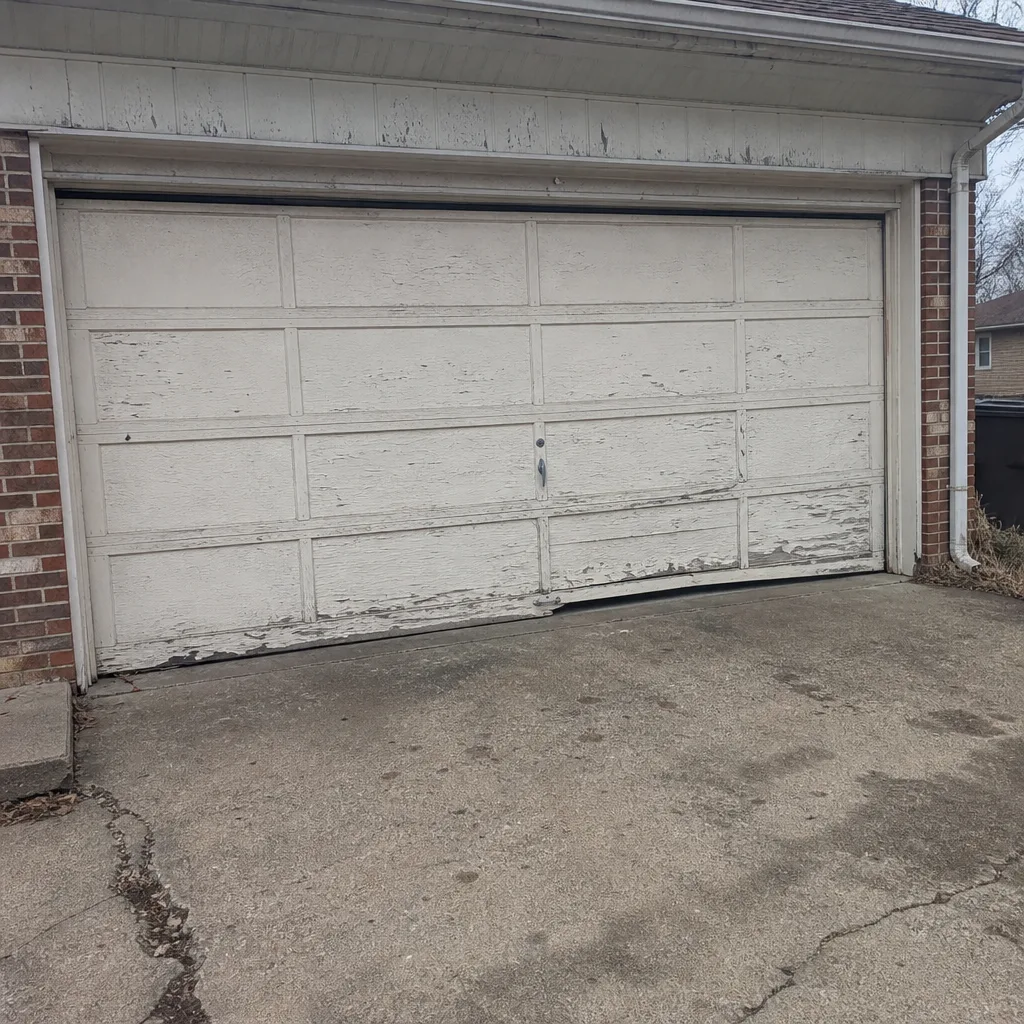 Before
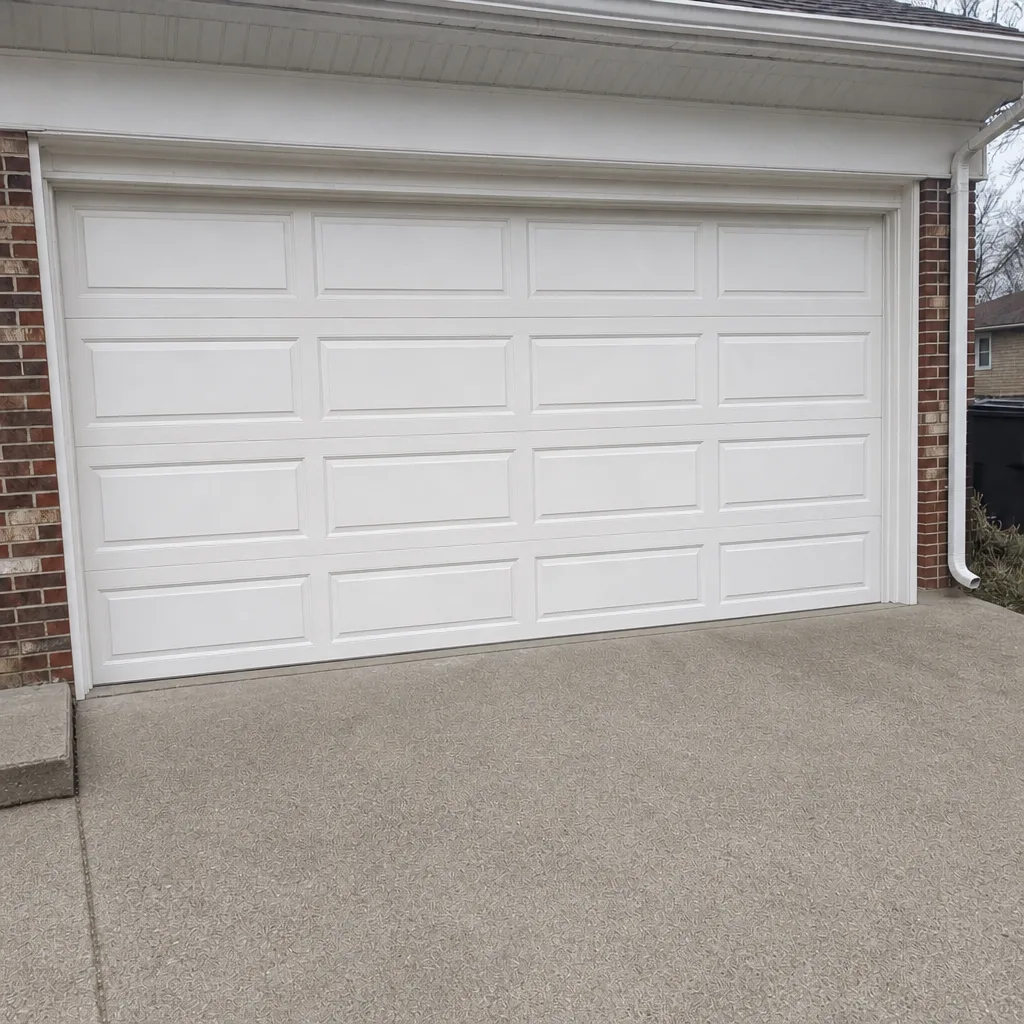 After
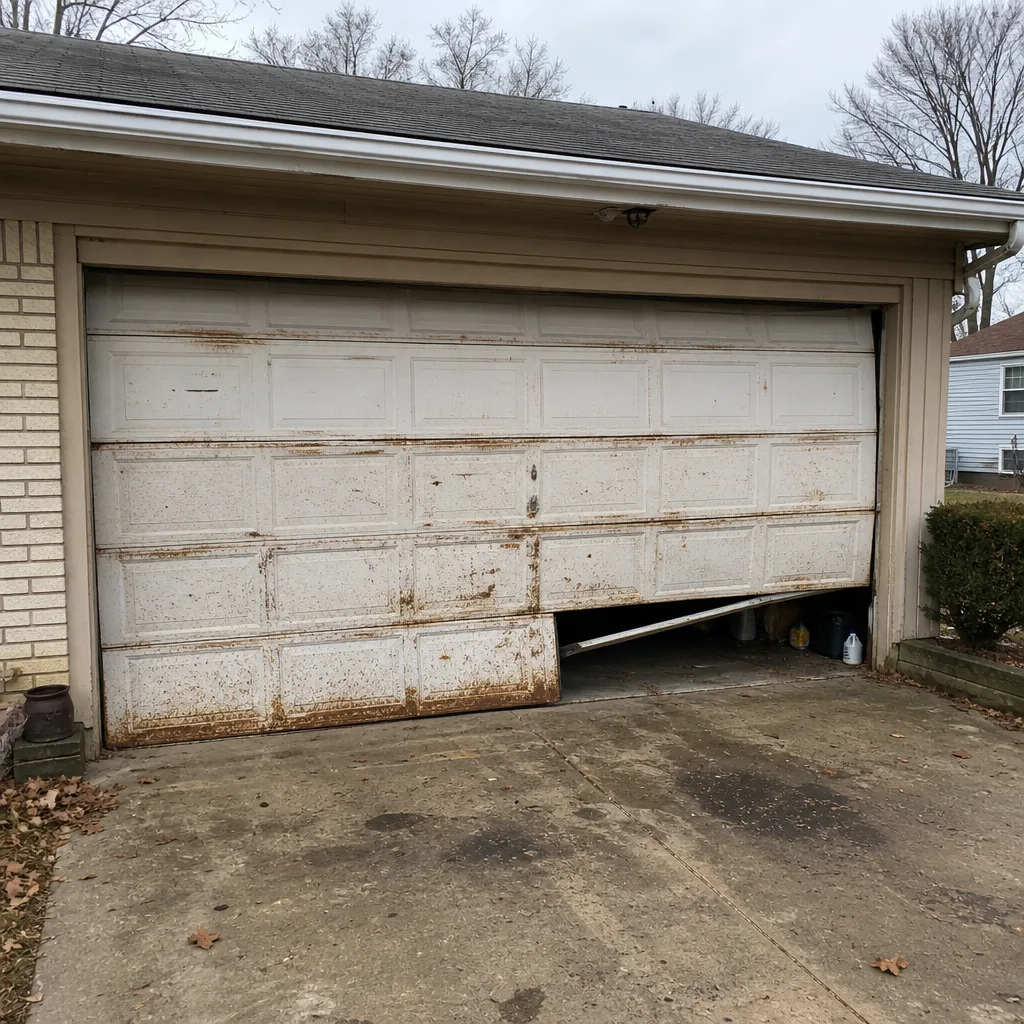 Before
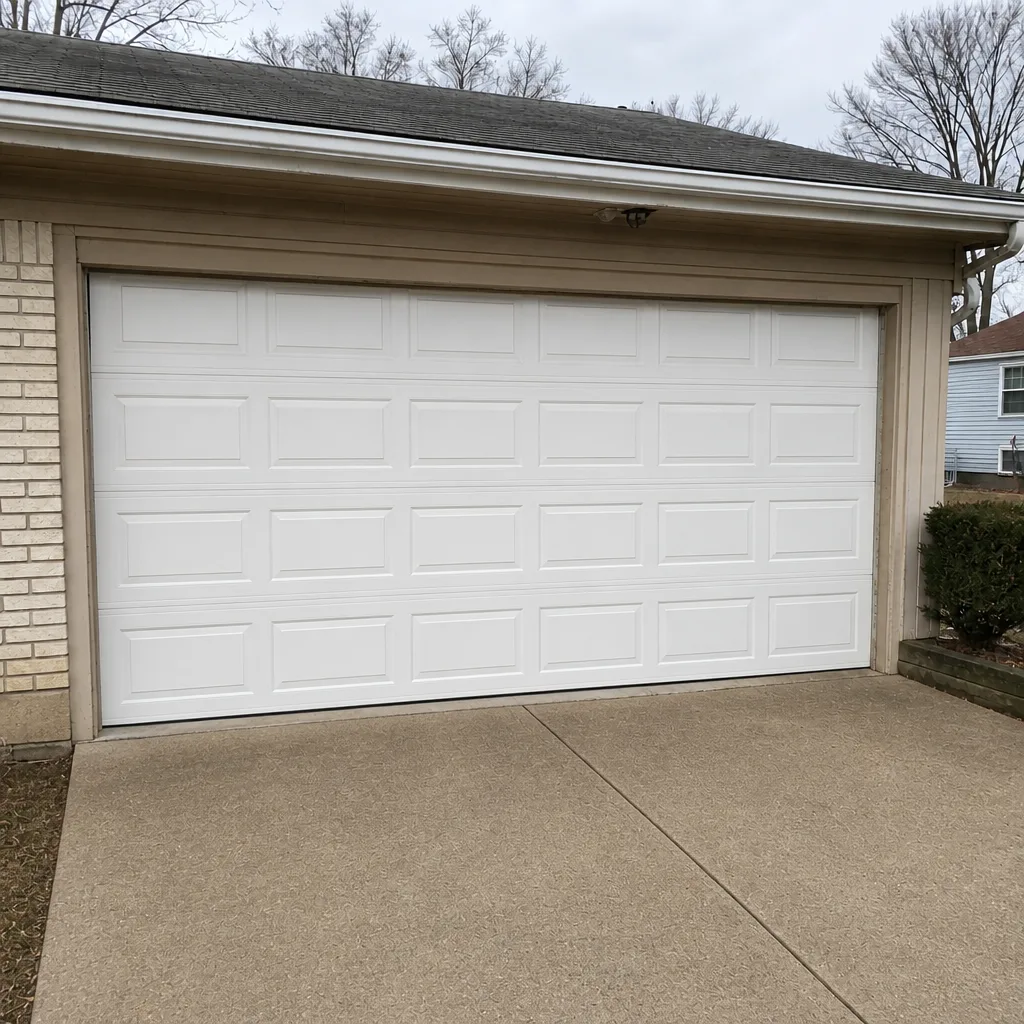 After
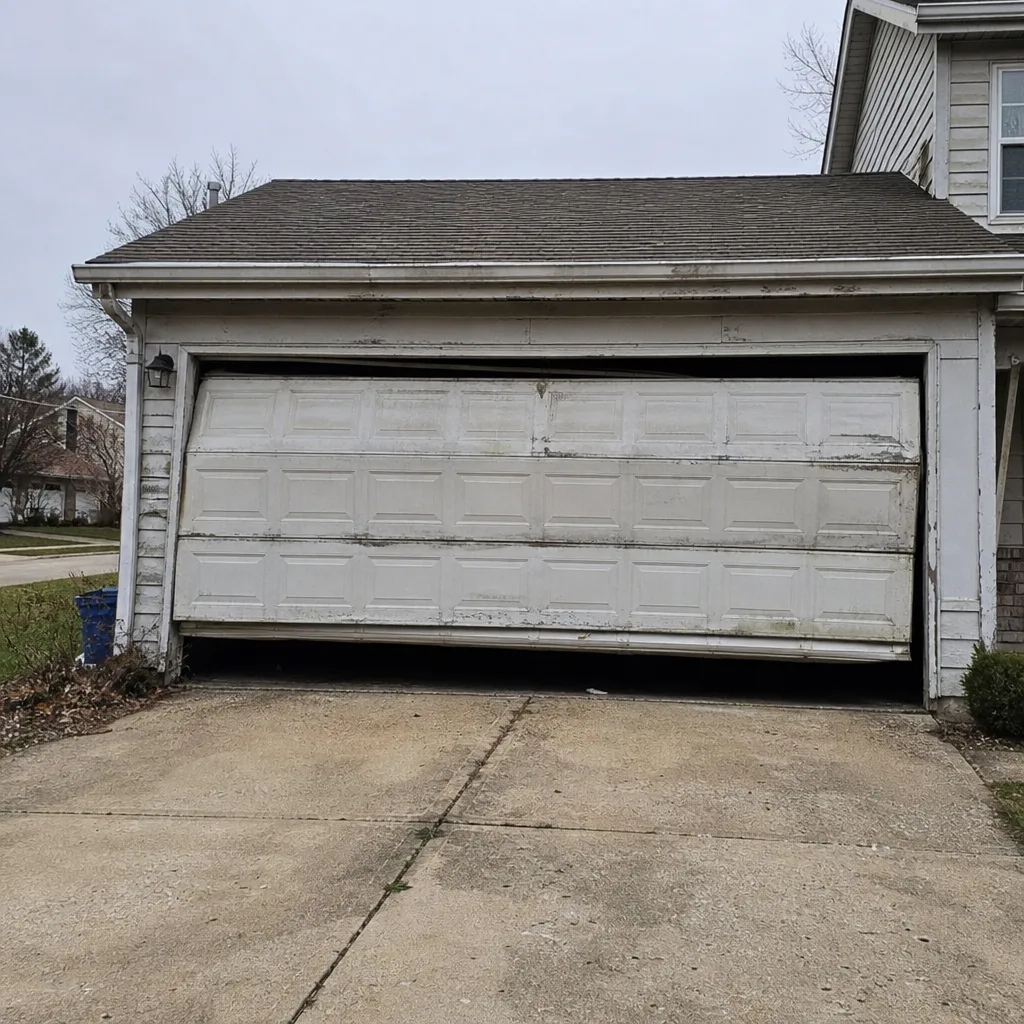 Before
 After
Frequently Asked Questions
The most common warning sign is a grinding or scraping noise as the door moves. It points to a dry or worn roller, a track issue, or a joint that needs lubrication. It’s also the easiest sign to address early, before the wear spreads to other parts. Call (844) 943-4245 if you’d like a free estimate.
A spring problem shows up in the door itself: sagging, popping, uneven movement, or a door that’s far heavier than it used to be. An opener problem shows up as a motor that runs without moving the door, ignores the remote, reverses mid-travel, or responds slowly. In practice, a technician listens to the door and the opener separately. Call (844) 943-4245 and describe which behavior you’re seeing.
It’s usually a small fix with a real effect. The door may not be sitting level, the seal may be compressed or torn, or the travel limit may be set slightly short. It’s worth addressing because an unsealed door lets weather and pests in. Call (844) 943-4245 for an estimate.
Cleaning the tracks and applying the right lubricant to rollers and springs is reasonable maintenance. Anything that involves the springs, cables, or track adjustments is a different matter, because those parts are under tension and the fixes need precision. When in doubt, leave the mechanism to a technician. Call (844) 943-4245 to schedule a free estimate.
A quick monthly look catches most problems early: listen to the door during one full cycle, look at the springs and cables, and check that the door seals evenly. That’s a few minutes a month. Knowing what to look for is the hard part, which is the point of this guide.
Stop operating the opener and don’t try to force the door open or closed. If the garage is your way into the house or the vehicle is trapped, call (844) 943-4245 and describe the position of the door. We offer emergency garage door service for stuck or broken doors that compromise access or home security, and we can work with your insurer if a repair is claims-related.
The Bottom Line
Most of what your garage door tells you goes unnoticed until it fails. The grinding, the popping, the crooked opening, the sluggish opener: each one points to a specific failing part, and each one is cheaper to fix early. The genuinely urgent signs are the short list: frayed cables, a visible spring gap, a burning smell, a door off its track or stuck. Everything else can usually wait for a scheduled visit, as long as you don’t wait too long. Describe what you see and hear in plain words, and a technician can show up ready. If you’re in Florissant and something doesn’t sound right, call (844) 943-4245 for a free estimate. Garage doors are all we do.
Written by the team at Garage Door Repair Florissant.