Last updated November 22, 2026
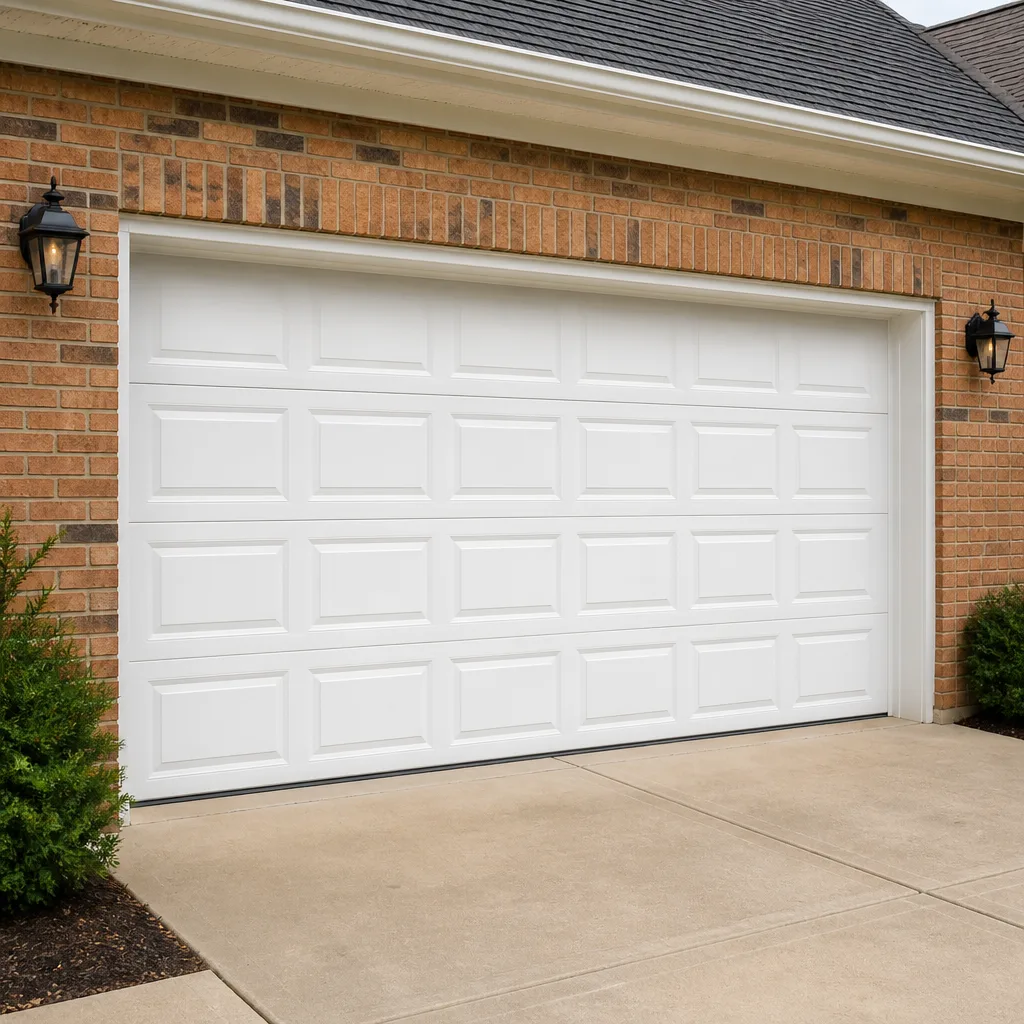 Raised-panel steel
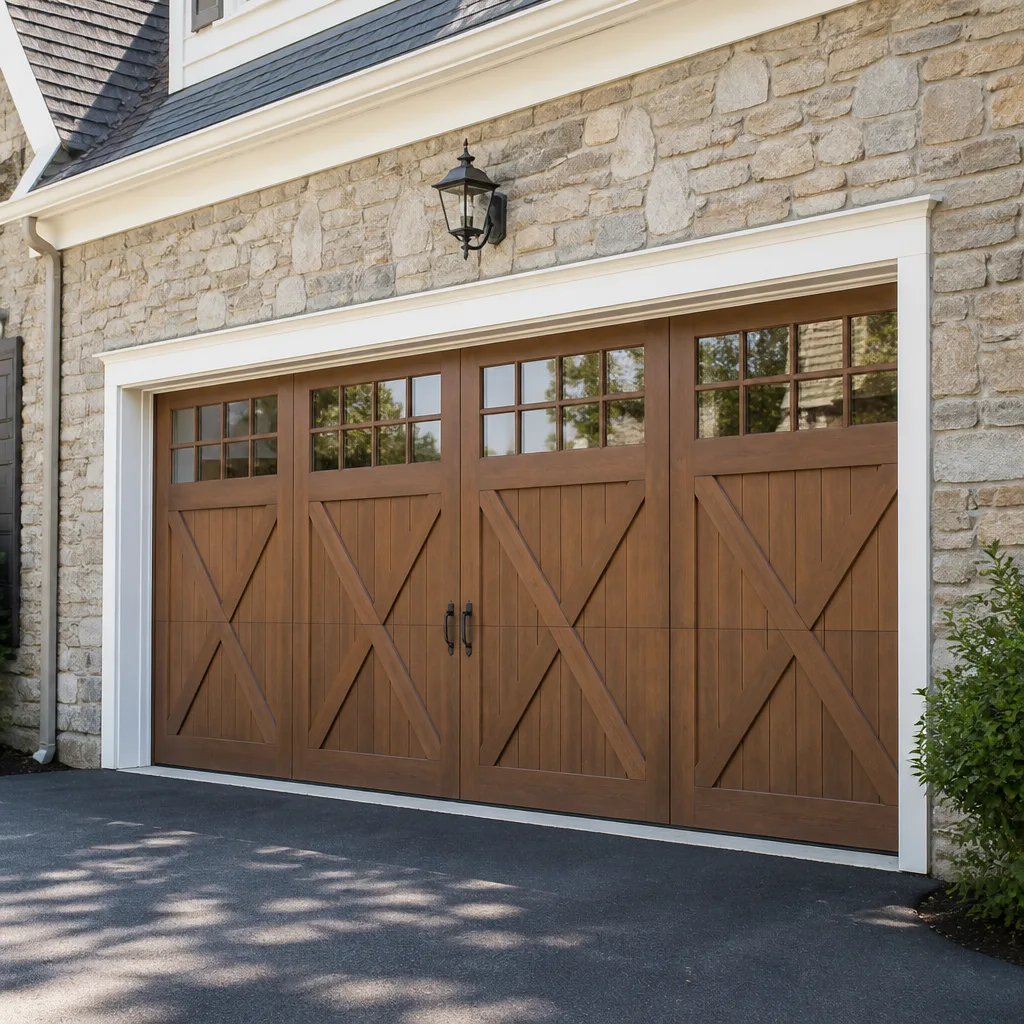 Carriage house
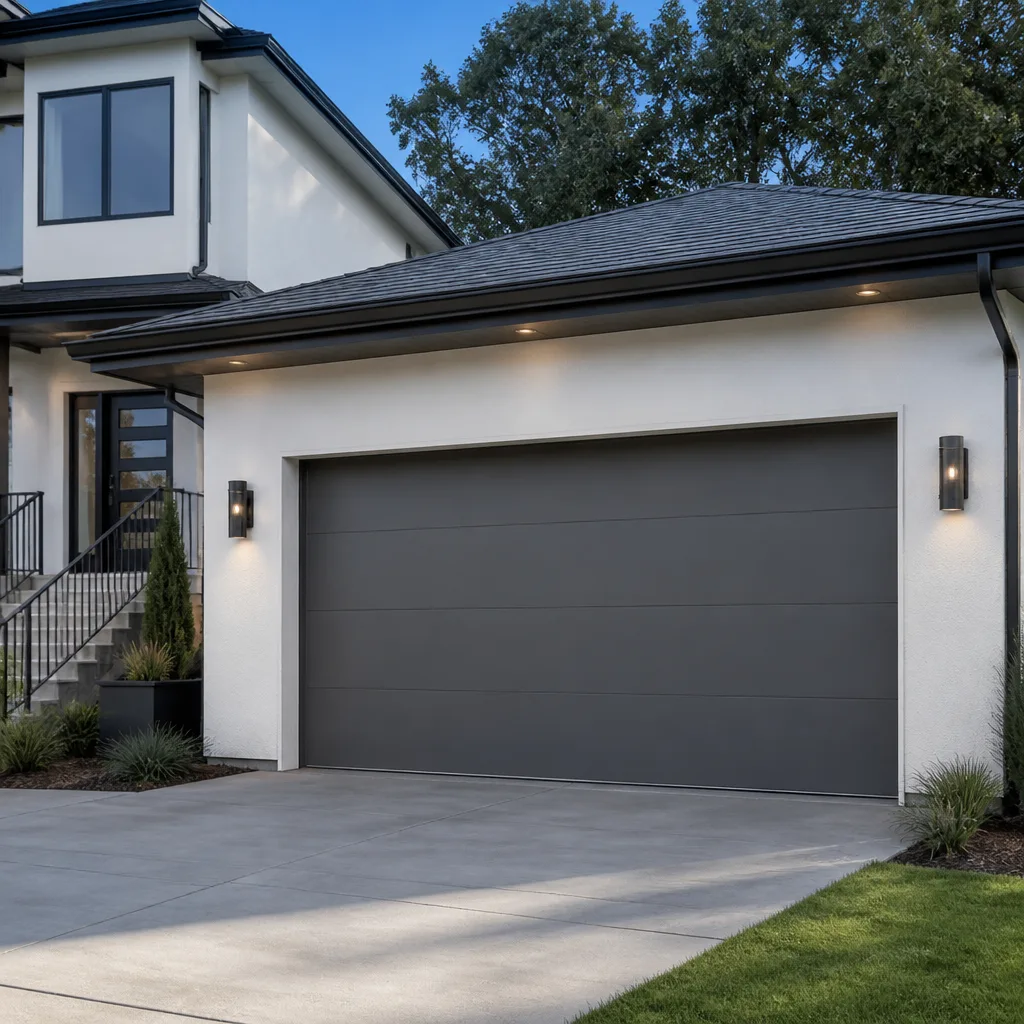 Modern flush
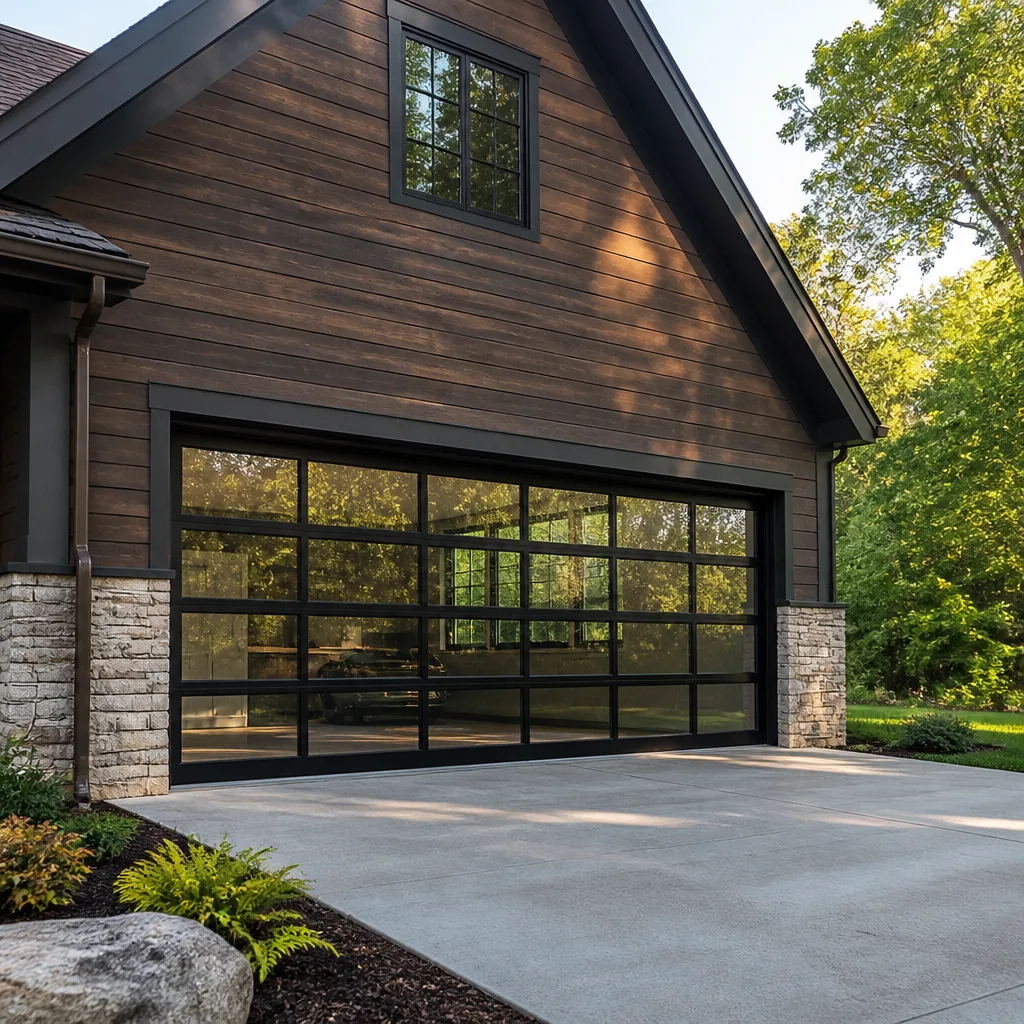 Full-view glass
 LiftMaster openers
 Chamberlain openers
Full 25-point door and opener safety check with every visit - springs, cables, rollers, tracks, and your LiftMaster or Chamberlain opener included
You get a price before we start. It does not change when the pro arrives.
Get your free estimateThe Complete Guide to Garage Doors in Florissant
Most garage door guides are written for a hypothetical homeowner in a hypothetical climate. This one isn’t. Florissant has its own set of conditions that shape how a garage door ages, why it fails, and what actually works as a fix. The housing stock here leans heavily on ranch and split-level homes built between the 1960s and 1980s, many with attached garages that sit under living space and see every swing of Missouri weather firsthand. Summers bring humidity thick enough to warp a wooden panel; winters throw sub-zero wind chills at a mechanical system that has to move smoothly every single morning. Generic advice about “lubricating your door” doesn’t account for any of that. This guide does. You’ll learn how the local freeze-thaw cycle stresses springs, what door widths and headroom limits show up in Florissant builds, which materials make sense here, and the honest decision points between a repair, a panel swap, and a full replacement.
Quick Answer
Garage doors in Florissant face a demanding local climate: repeated freeze-thaw cycles, humid summers, and wide temperature swings that wear down springs, weather seals, and opener hardware faster than in milder regions. The right strategy depends on the age and build of your home. Older ranch and split-level garages often have low headroom and non-standard door widths, which limits your options for openers and torsion systems. A repair usually makes sense for a single failing component (a spring, an opener, a bent track), while a full replacement is the honest call when the door is structurally compromised, badly insulated for an attached garage, or several systems are failing at once.
Styles & brands we work with
- Raised-panel steel
- Carriage house
- Modern flush
- Full-view glass
- LiftMaster openers
- Chamberlain openers
Table of Contents
- How Florissant’s Freeze-Thaw Cycle Wears Out Your Garage Door
- Door Widths and Headroom in Florissant’s 1960s-1980s Homes
- Which Materials Make Sense for an Attached Garage Here
- HOA Rules in Florissant Subdivisions: Staying Compliant While Upgrading
- The Full Job Lifecycle: Repair, Panel Replacement, or Full Replacement
- Springs, Seals, and Openers: What Fails First in This Climate
- Common Mistakes to Avoid
- Frequently Asked Questions
How Florissant’s Freeze-Thaw Cycle Wears Out Your Garage Door
Florissant sits in a stretch of Missouri that spends roughly 100 or more days a year near or below freezing, and that number matters more than the odd deep cold snap. What kills garage door components isn’t one hard freeze; it’s the constant cycling back and forth across the freezing point. Every time the temperature dips below freezing and climbs back above it, materials expand and contract. Multiply that by a full season and you get the wear patterns we see all over Florissant.
Here’s how that cycling shows up in practice:
- Torsion and extension springs lose tension unevenly. Metal fatigues through repeated thermal expansion. A spring that was properly tensioned in October can be noticeably weak by March, and an unbalanced door strains the opener every time it runs.
- Weather seals crack and pull away. The rubber or vinyl seal along the bottom and sides hardens faster here because it flexes through dozens of freeze-thaw transitions. Once it cracks, cold air and moisture get in, and the seal fails faster still.
- Bottom seal adhesion suffers. Adhesive that holds the bottom seal to the door panel doesn’t like repeated moisture-then-freeze cycles. Seals peel at the corners first, then work loose along the whole width.
- Metal rollers and hinges stiffen. Cold thickens lubricant and moisture works into pivot points, so the door gets noisier and harder to move before anything actually breaks.
Southern markets don’t deal with this. A homeowner in Florida might replace a bottom seal every few years because of sun and heat; here the seal dies from the freeze side. Coastal markets worry about salt corrosion, which isn’t a factor in Florissant. The local enemy is thermal cycling and humidity, not salt. That’s why our garage door spring repair calls cluster in late winter and early spring, right after the worst of the freeze-thaw season. If your door suddenly feels heavy or the opener strains to lift it, that’s the classic signature. We’d rather catch it then than after a spring breaks.
Door Widths and Headroom in Florissant’s 1960s-1980s Homes
The ranch and split-level homes that make up a big share of Florissant’s housing stock were built to specific dimensions that shape what you can install today. Most of these garages are single-car or two-car, and the door openings tend to fall into a few predictable sizes. Knowing yours before you shop saves a lot of guesswork.
What we typically encounter in Florissant:
- Single-car doors commonly run 8 or 9 feet wide, with 7 feet of height being standard. Some older builds use a slightly narrower opening that rules out off-the-shelf doors.
- Two-car doors usually come in 16 feet wide by 7 feet high, though some split-level builds use two separate 8 or 9 foot doors instead of one wide door.
- Headroom is the real constraint. Many 1960s and 1970s garages have as little as 10 to 12 inches of headroom above the door. That limits you to low-headroom torsion setups or specific opener types rather than standard rails.
- Ceiling height and side clearance both affect which opener and track configuration will fit. A low-clearance situation may need a different spring system entirely.
This is where a generic buying guide falls apart. It’ll tell you the “standard” door is 16 by 7, which is true for a lot of newer construction, but plenty of Florissant homes built in the 1960s through 1980s have quirks. A split-level with a garage tucked under the main floor often has a lower ceiling than a straight ranch. Before you order anything, measure the actual opening width and height, the headroom from the top of the door to the ceiling, and the side clearance on each side. Those three numbers determine your real options. When they’re tight, the right opener choice matters more than the door itself, which is why we always check compatibility before recommending a unit. A garage door opener repair visit is a good time to sort this out, because we can tell you whether your existing opener is properly matched to the space or fighting it.
Which Materials Make Sense for an Attached Garage Here
Attached garages in Florissant have a specific problem: they share walls and sometimes a ceiling with living space, so the door isn’t just a security barrier, it’s a thermal boundary. Summer humidity and winter wind chills both push through an under-insulated door. That makes material and insulation choices more consequential than they’d be for a detached garage.
Here’s how the realistic options stack up for this region:
- Single-layer steel (24 or 25 gauge): The most common and least expensive option. It handles humidity well because steel doesn’t absorb moisture, but an uninsulated steel door transfers heat and cold straight through. Fine for a detached or well-separated garage; hard to recommend for an attached garage that shares conditioned space.
- Insulated steel (sandwich construction): The practical sweet spot for Florissant for attached garages. A steel outer skin with a foam or polystyrene core gives you durability against humidity plus a real thermal break against winter wind chill. Brands like Clopay and Amarr both make strong insulated steel lines in standard sizes that fit older openings.
- Wood and wood-composite: Beautiful, but humidity is unkind to them here. Wood absorbs summer moisture and swells, then dries and shrinks through the freeze-thaw cycle. They need more upkeep than steel in this climate, and that’s before HOA color rules come into play.
- Aluminum: Light and rust-resistant, but it dents easily and offers little insulation. Better for a decorative detached garage than a shared thermal boundary.
The gauge of the steel matters too. Thicker steel (lower gauge number) resists dents better and holds its shape through thermal movement. For a two-car door that gets opened several times a day in Florissant weather, that durability pays off. Insulation value in an attached garage is the other lever: it keeps the room above or beside the garage warmer in winter and cooler in summer, and it quiets the door operation considerably. If you’re weighing options, our garage door repair team can tell you whether your current door is worth insulating around or whether a replacement door makes better sense. Whether it’s a repair or a full replacement, we’ll tell you which one you actually need.
HOA Rules in Florissant Subdivisions: Staying Compliant While Upgrading
Many Florissant subdivisions have homeowner association rules that govern what your garage door can look like from the street. These rules are usually about appearance, not function, but they can quietly veto an upgrade you were counting on. The most common restrictions cover color, panel style, window placement, and material. A door that matches your neighbor’s down to the panel pattern is often the safest bet if your HOA is strict.
A practical sequence for upgrading within HOA rules:
- Get the current architectural guidelines in writing. Ask your HOA board for the exact document governing exterior changes, not a verbal summary. Rules change and older paperwork may be out of date.
- Identify which parts of your desired upgrade affect appearance versus function. Insulation, spring type, and opener brand usually aren’t HOA concerns. Color, style, and windows usually are.
- Match style and color first, upgrade behind the scenes second. You can often install a much better door functionally (more insulation, sturdier steel) while keeping the same outward color and panel profile your HOA already approved.
- Submit the request with a product spec sheet. A photo or spec sheet from the manufacturer showing color and style makes approval faster than a vague description.
- Keep the approval on file. If a future board member questions the door, you’ll have documentation.
The good news is that most functional upgrades in Florissant’s climate are invisible from the curb. You can move from a thin uninsulated steel panel to an insulated sandwich door, swap a worn opener for a Chamberlain or Genie unit, and tighten up your weather seals without changing what the neighbors see. The tricky part is when a functionally better door only comes in a color your HOA dislikes. That’s when it pays to have the guidelines in front of you before you fall in love with a style. If you’re not sure whether your existing door can be upgraded in place rather than replaced, a repair assessment will tell you.
The Full Job Lifecycle: Repair, Panel Replacement, or Full Replacement
This is the decision that trips up the most Florissant homeowners, so let’s be direct about it. A repair makes sense when one component has failed and the rest of the system is sound. Panel replacement is often a trap. Full replacement is the honest call when the door is structurally compromised or several systems are failing together. We’d rather tell you the right answer than sell you the bigger job.
Here’s how we think through it, in order:
- Is it a single mechanical failure? A broken spring, a dead opener, a bent track, a roller that’s seized. If the door panels are straight, the frame is solid, and everything else works, this is a repair. Back in working order the same visit is usually possible for a broken spring or a failing opener.
- Is the door structurally sound but cosmetically tired? Dented panels, faded paint, a bottom seal that won’t stay put. Sometimes a panel swap or a seal replacement is enough. But be careful: matching a single replacement panel to older, slightly weathered panels rarely looks right, and if the manufacturer has discontinued the style, you may not be able to match it at all. That’s the panel replacement trap. A “cheap” panel fix that leaves a mismatched door is money you’ll spend again.
- Are multiple systems failing at once? If the springs are worn, the opener is straining, the panels are dented, and the seals are shot, you’re not fixing a door, you’re rebuilding one piece at a time. At that point a full replacement is usually the better value.
- Is the door wrong for the house? A thin uninsulated door on an attached garage in Florissant is the wrong tool for the thermal job. Upgrading to an insulated Clopay or Amarr door is a replacement, not a repair, because you’re changing the entire system.
- Is safety a factor? A door with a cracked panel, a bent track that lets the door run off-line, or a spring that’s clearly fatigued is a genuine hazard. Repair or replacement isn’t optional at that point.
The full job lifecycle matters because Florissant doors age in a predictable order: springs and seals first, then openers, then panels. If you catch it at the spring stage, you’re doing a repair. If you wait until all three are failing, you’re doing a replacement. Our technicians have up to 9 years of experience reading that progression, and we’ll give you the straight answer on which stage you’re in. Garage doors are all we do, so there’s no reason to steer you toward the wrong fix.
Springs, Seals, and Openers: What Fails First in This Climate
If you want to know what’s going to break, look at the order things fail in Florissant. Springs go first, then weather seals, then openers, then panels. Understanding that sequence lets you fix problems while they’re still cheap and safe.
Springs. A broken spring is our most common call. Torsion springs sit above the door and do the actual lifting; extension springs run along the sides. Both fatigue through the freeze-thaw cycling described earlier. A spring under tension stores an enormous amount of energy, and a failed one can snap violently. This is the one part of a garage door system you should never try to adjust or replace yourself. The wound torsion spring above the door is genuinely dangerous, and a mistake there can cause serious injury. Call a trained professional. Our garage door spring repair is a core specialty for exactly this reason.
Weather seals. The bottom seal and side seals keep out cold, moisture, and pests. In Florissant they take a beating from the freeze-thaw cycle. Check yours each fall: if it’s cracked, hardened, or peeling at the corners, replace it before winter locks it in. Seals are inexpensive to replace and cheap insurance against a much bigger problem.
Openers. An opener fails in one of two ways in this climate: the motor burns out from straining against a heavy or unbalanced door, or the logic board or safety sensors fail. The first kind is preventable. If your door feels heavier than it used to, that’s your springs, not your opener, and replacing the opener without fixing the springs just kills the new opener faster. We work on the brand already in your garage, whether that’s Chamberlain, Genie, or any of the major brands, so you’re not stuck finding a specialist for your specific unit.
Panels and tracks. These fail last unless something impacts the door. A small dent is cosmetic; a bent track that lets the door run off-line is a safety issue. When in doubt, have it looked at.
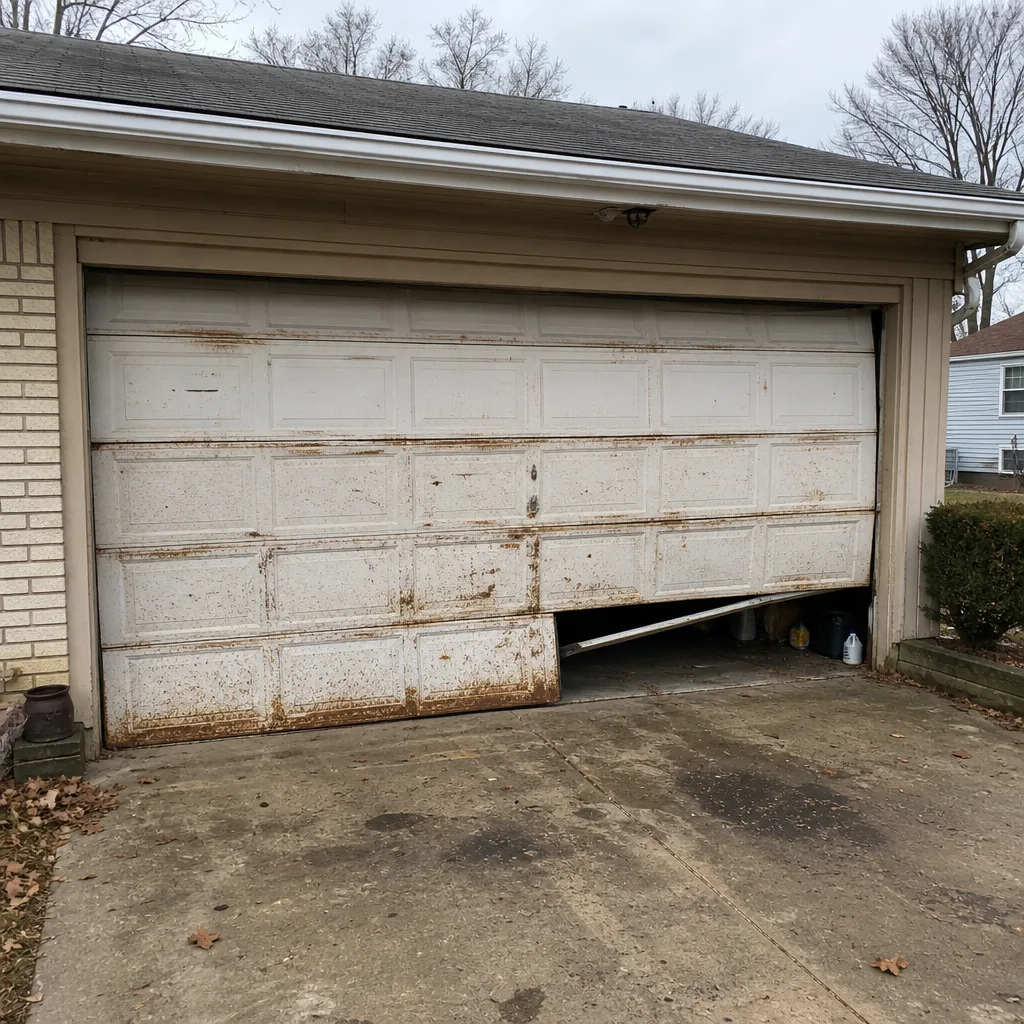
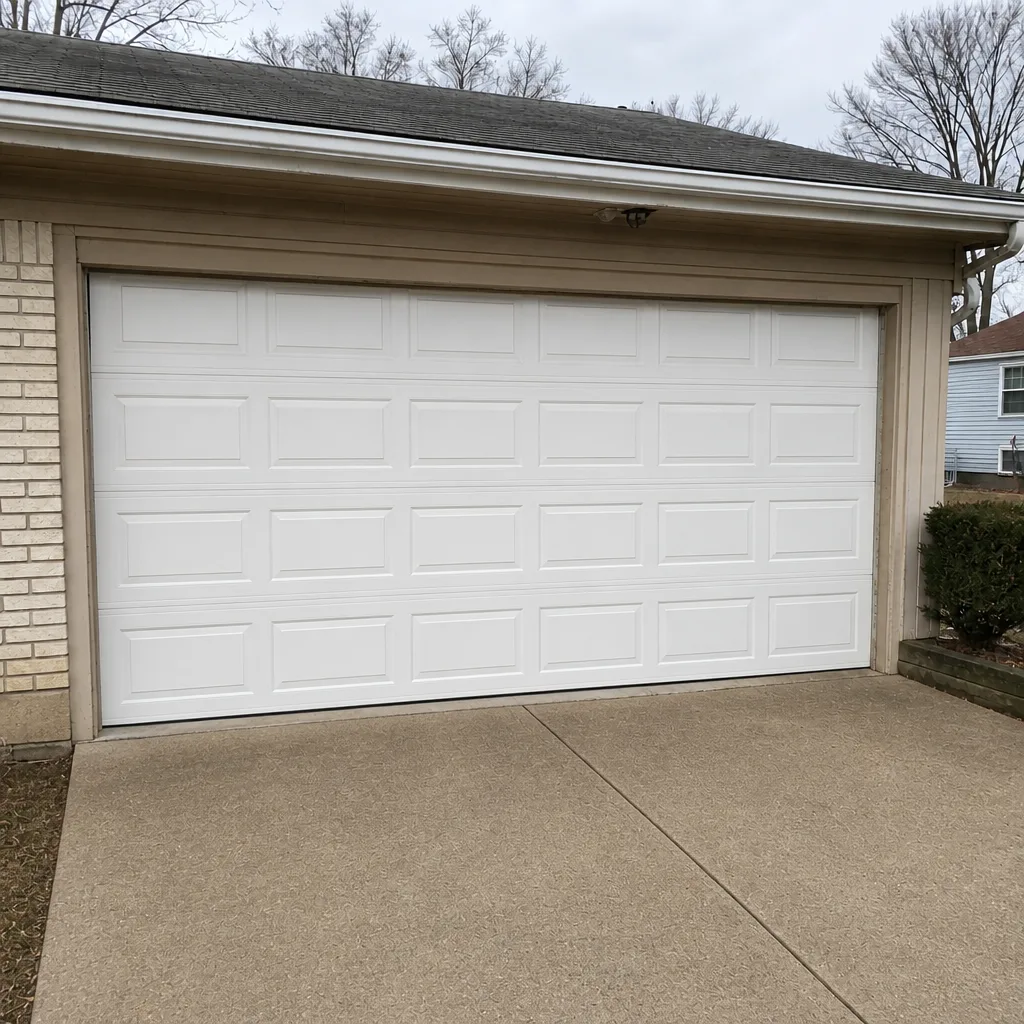
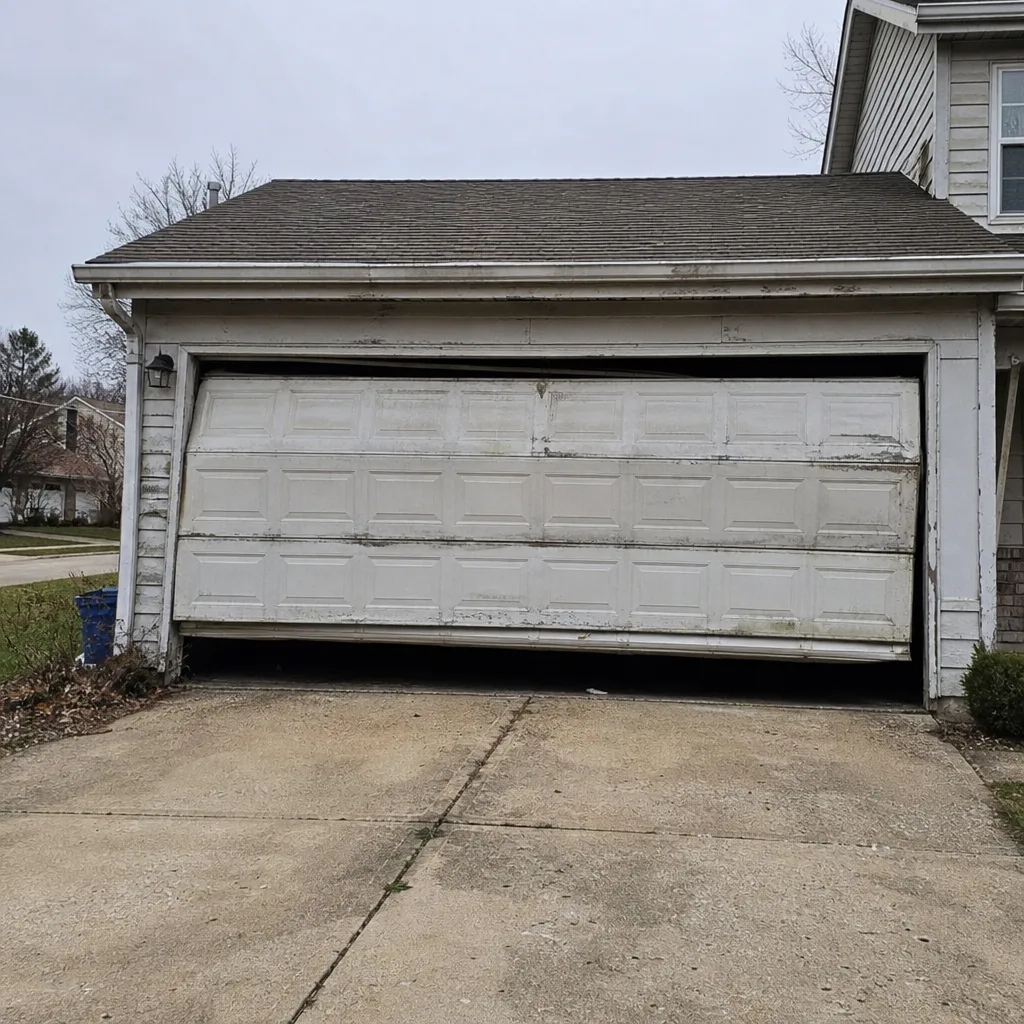
See the difference
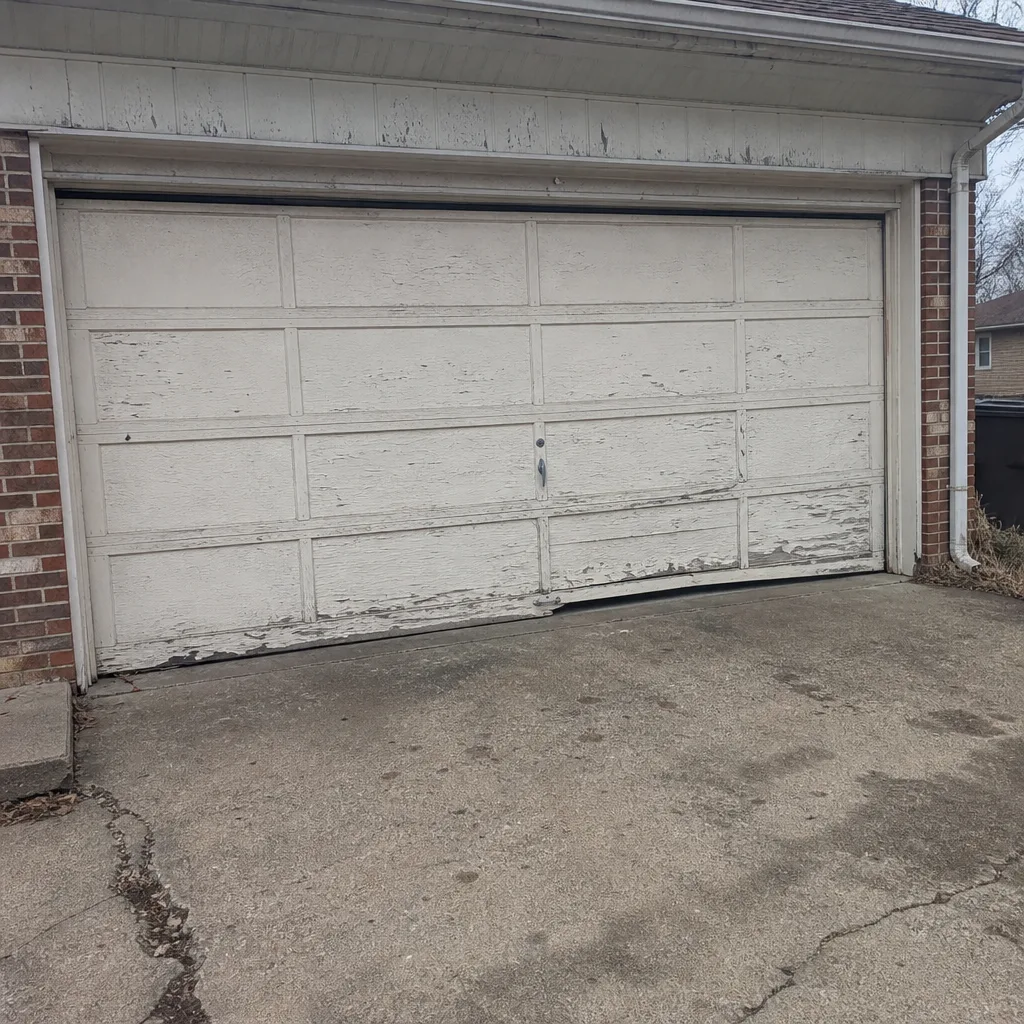 Before
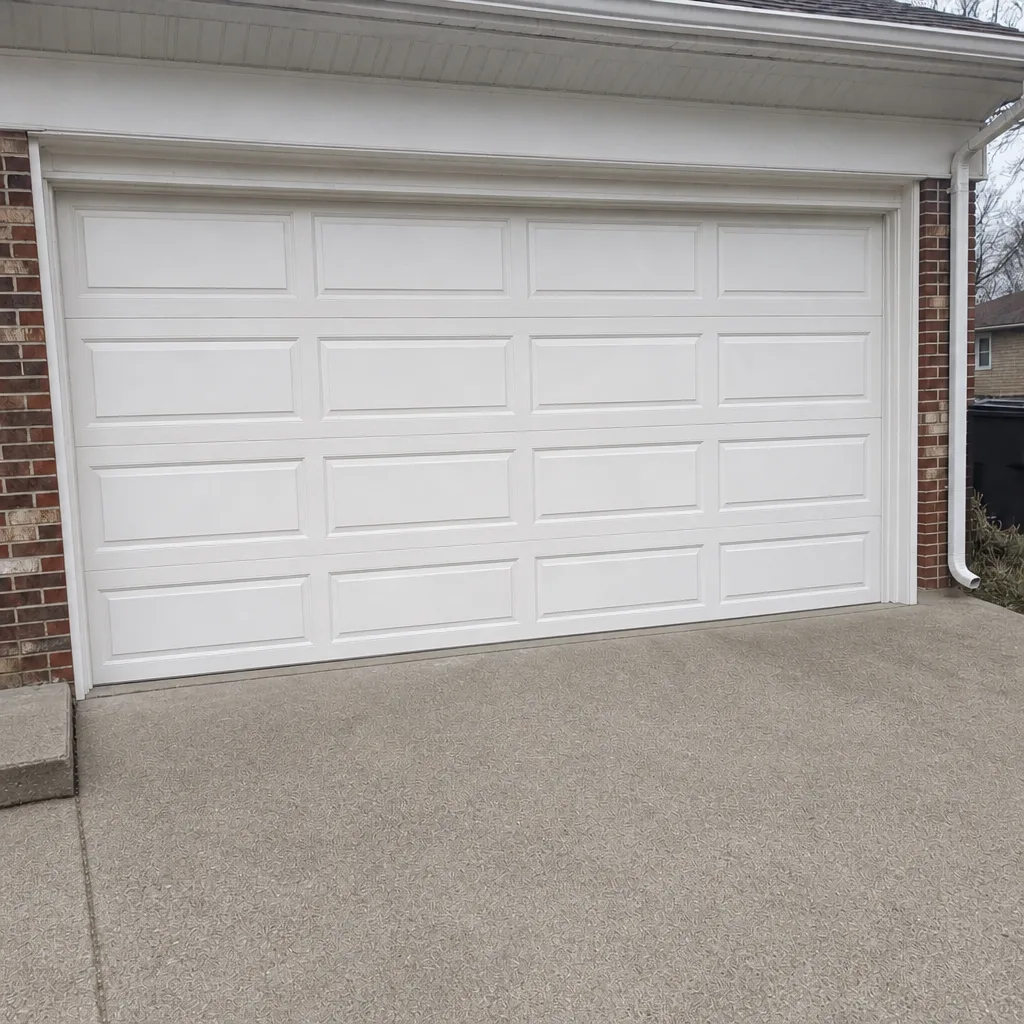 After
 Before
 After
 Before
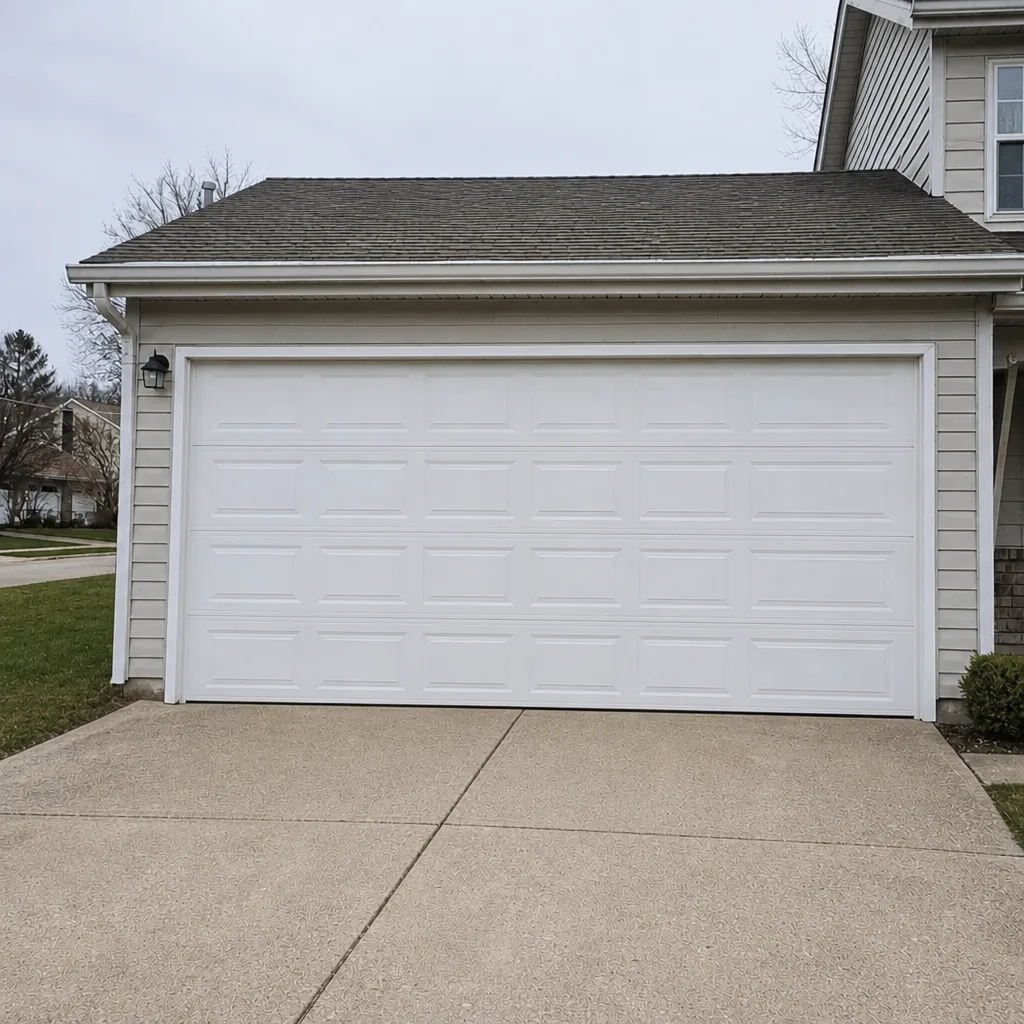 After
Common Mistakes to Avoid
- Replacing an opener when the real problem is the springs. A straining opener is usually a symptom of a heavy door, not a bad motor. Swap the opener without fixing the springs and you’ll be buying another opener soon.
- Ignoring a cracked or peeling bottom seal through winter. In Florissant, that gap lets freeze-thaw moisture in and accelerates everything around it. It’s cheap to fix now and expensive to ignore.
- Buying a door before checking headroom and clearance. A door that fits the opening but not the low headroom of a 1960s split-level garage won’t install cleanly. Measure all three dimensions first.
- Attempting spring work yourself. This is the most dangerous job on a garage door. There’s no safe DIY path. A trained professional handles this one.
- Doing a single-panel replacement on a discontinued style. You’ll end up with a mismatched door and money spent twice. Check whether the panel can actually be matched before committing.
- Skipping the HOA guidelines before choosing a color or panel style. A functionally great door that violates your subdivision’s rules is a problem you’ll have to solve twice.
- Choosing an uninsulated door for an attached garage. In Florissant’s climate the door shares a wall with living space. Insulation pays for itself in comfort and heating cost over time.
When to Call a Professional
Some garage door problems are cosmetic and can wait. Others are genuine safety or security issues and shouldn’t. Call a professional when a spring breaks or your door suddenly feels much heavier than before. Call when the door comes down crooked, the track is bent, or the opener strains and reverses without reason. Call if a panel is cracked or the door is visibly off its track. And call if your door won’t close all the way, leaving your home open to weather and theft. We offer Garage Door Repair Florissant with emergency service for exactly those urgent failures that compromise your security or vehicle access, plus free estimates so you know the price before anything starts. Garage Door Repair Florissant offers free estimates in Florissant. Call (844) 943-4245.
Frequently Asked Questions
Spring repair in Florissant typically runs a modest amount for a single spring, and about double that when both springs in a matched pair are replaced together, which is the usual recommendation. The price is quoted and agreed before any work starts, so the written estimate sets the final number. Call (844) 943-4245 for an exact quote. Estimates are free.
For emergency situations where a stuck or broken door leaves your home unsecured or blocks your vehicle, we can often get out the same day. Broken springs and dead openers are the most common urgent calls. Call (844) 943-4245 and we’ll tell you what’s available. For new door installation or full replacement, the job involves measuring, ordering, and scheduling, so that work is booked rather than same-day.
No. We quote and agree the price before any work begins, and the written estimate is the number you pay. The only way the price changes is if you ask us to do additional work beyond the original estimate, and we won’t start that without a new agreed price first.
The local professionals we connect you with are licensed and insured as their state requires, and our technicians have up to 9 years of experience working on residential garage doors. We work on the brand already in your garage, including Chamberlain, Genie, Clopay, and Amarr systems. Call (844) 943-4245 to book an estimate.
Florissant sees 100 or more days a year near or below freezing, and it’s the constant cycling across the freezing point that wears springs out. Each freeze-thaw transition expands and contracts the metal, and that fatigue adds up over a season. The result is that springs here often fail sooner than in a milder, more stable climate. It’s why we treat spring repair as a core specialty.
A single panel replacement makes sense only if the panel can be matched to your existing door and the rest of the system is sound. If the style is discontinued or several components are failing, a full replacement is usually the better value. We’ll tell you which one you actually need after we see the door. Call (844) 943-4245 for a free estimate.
The Bottom Line
Garage doors in Florissant age on a different schedule than they do almost anywhere else. The freeze-thaw cycle stresses springs and seals harder, the humidity punishes wood doors, and the older ranch and split-level housing stock sets real limits on door width, headroom, and opener choice. Understanding that local context turns a confusing repair-or-replace decision into a clear one: fix the single failing part when the rest of the system is sound, be careful with panel replacements on discontinued styles, and replace the whole door when it’s structurally compromised or under-insulated for an attached garage. Match your door to your HOA rules before you shop, measure all three dimensions before you order, and never touch a spring yourself. That’s the short version. The long version is your actual door, and we’re happy to look at it.
If you need garage door repair or a full assessment in Florissant, call (844) 943-4245 for a free estimate. We’ll tell you what’s wrong, what it costs, and whether a repair or a replacement is the honest call.
Written by the team at Garage Door Repair Florissant.